Screen printing is one of the oldest printing processes. It is still indispensable today. No other process applies so much ink or works on so many different materials. What exactly is screen printing, how does it work and where is it used? Here are the answers.
How screen printing works
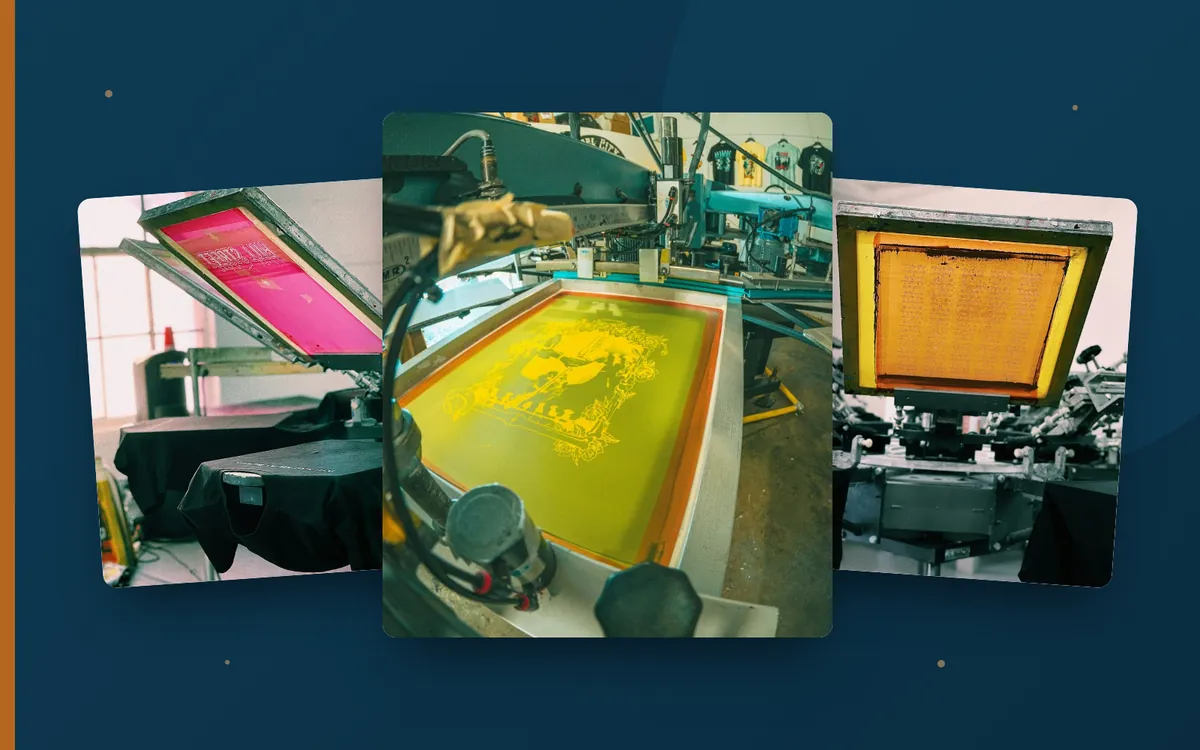
In screen printing, a fine-mesh fabric is stretched over a frame. This is the screen. All areas that should not print are blocked out with a stencil. The ink is then pressed through the open mesh onto the material with a rubber squeegee. Each colour needs its own screen, and the colours are printed one after another.
The benefits of screen printing
- Thick ink layer: Screen printing applies much more ink than other processes. Colours look rich, vibrant and very opaque.
- Opaque white and special inks: White on dark backgrounds, neon and metallic inks or effect varnishes are particularly easy to achieve with screen printing.
- Many materials: paper, board, plastic, glass, metal, wood or textiles. Screen printing is extremely versatile.
- Curved surfaces too: With special machines, round objects such as bottles or cans can also be printed.
- Tactile effects: The thick ink layer creates surfaces you can feel, for example for logos or Braille.
- Durable: Screen printing inks are often particularly resistant to light and weather. That makes them suitable for outdoor use too.
The limits
Screen printing is less suitable than offset or digital printing for fine gradients and photorealistic images. In addition, each colour needs its own screen. Multi-colour designs therefore take more effort. Screen printing is most economical for designs with a few clearly separated areas of colour.
Where is screen printing used?
- Textiles: T-shirts, bags and workwear, one of the best-known applications
- Packaging: opaque colour areas, white on kraft or dark board, special varnish effects
- Glass and bottles: direct printing on beverage and cosmetics bottles
- Promotional products: pens, lighters, mugs and many other items
- Signs and lettering: robust prints for indoor and outdoor use
- Technical applications: control panels, scales or circuit boards
Screen printing on packaging
On packaging, screen printing shows its strengths especially for accents. An opaque white logo on brown kraft board looks both elegant and natural. Tactile varnish effects also make a gift box or product packaging stand out. Screen printing is often combined with other processes. The design is printed offset, and selected elements are finished with screen printing. Read more about finishing in our article Finishing that works.
Screen printing compared
Our article The most important printing processes at a glance shows how screen printing differs from offset, digital and UV printing.
Your screen printing project
We offer screen printing alongside offset, digital and UV printing from our own production. Send us the material, dimensions, quantity and design. We will advise you on whether screen printing is the best choice for your project and send you a binding quote within 24 hours.
Request a quote →