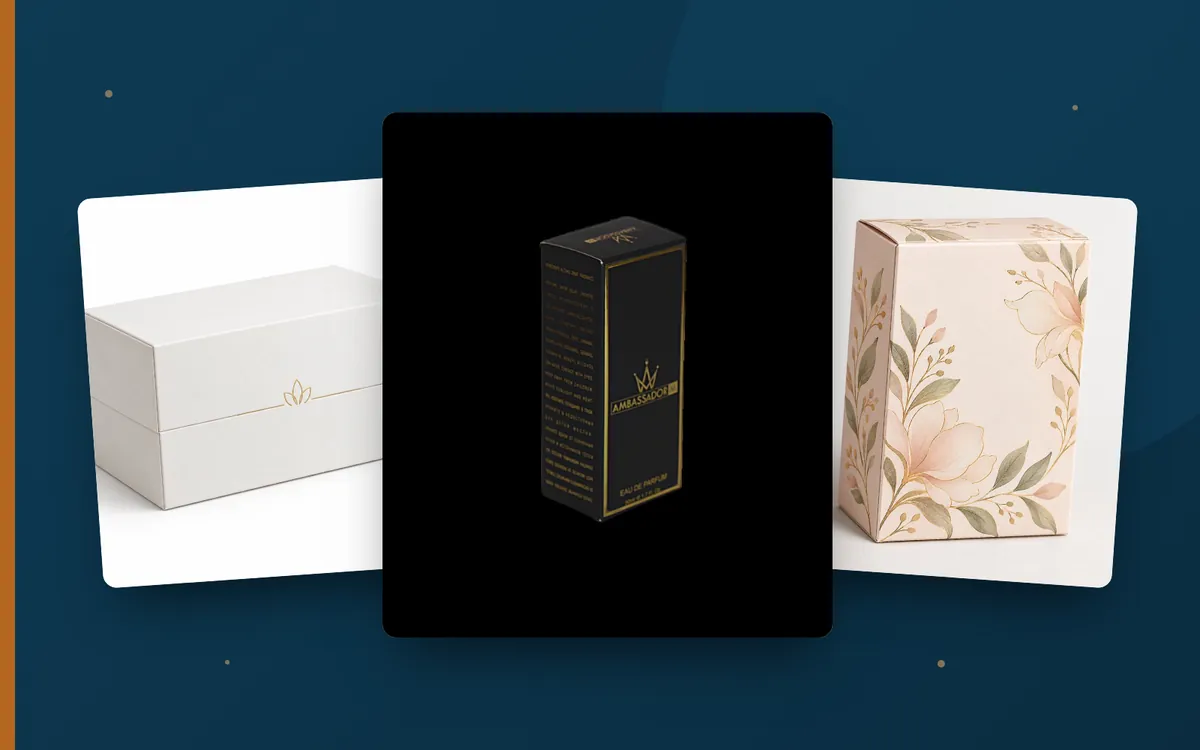
Packaging is not only seen but also felt. When a customer runs a finger over a raised logo, the brand stays in their memory. Raised varnish and embossing are two ways to give packaging a third dimension. Here is how they work and how they differ.
What is embossing?
In embossing, the material itself is shaped. An embossing tool with an upper and lower part presses the design into the board or paper with high pressure. There are several variations:
- Embossing (raised): the design stands out from the surface. This is the classic for logos and lettering.
- Debossing: the design is pressed into the material.
- Blind embossing: embossing without ink or foil. It looks subtle, elegant and timeless.
- Foil embossing: the combination of hot foil and embossing. The design shines and can be felt. More in our article Hot foil stamping.
- Multi-level sculpted embossing: several height levels for particularly three-dimensional designs
What is raised varnish?
Raised varnish, also called 3D varnish, is a particularly thick spot UV varnish. It is not pressed into the material but sits on the surface as a tactile, glossy layer. This creates raised logos, patterns or lettering with a distinct gloss effect.
Embossing and raised varnish compared
- Process: embossing shapes the material. Raised varnish adds a layer.
- Look: embossing looks subtle and classic. Raised varnish shines and creates striking accents.
- Reverse side: with embossing, the design is visible on the back as an indentation. With raised varnish, the back stays smooth.
- Tooling: embossing needs its own embossing tool. Raised varnish is applied by screen or digitally, depending on the process.
- Material: embossing works especially well on strong board and textured papers. Raised varnish needs a smooth, coated or laminated surface.
When is each suitable?
- Embossing: for timeless, elegant packaging, natural board, kraft board and premium products with a subtle look
- Raised varnish: for eye-catching accents, modern designs, combinations with soft-touch and designs that should shine
- Both combined: for maximum impact on premium products
Applications
Raised varnish and embossing are found on cosmetics packaging, gift boxes, spirits and delicatessen packaging, wine labels, book covers and business cards. Tactile elements can also be functional, for example for Braille on pharmaceutical packaging.
Planning tips
- Set up embossing and varnish areas as a separate layer or spot colour in the print data.
- With embossing, remember that the reverse side may be visible, for example inside a box.
- Very fine details cannot be embossed to any depth. We will advise you on design and material.
- Check the effect on a sample. Tactile effects cannot be judged on screen.
For an overview of other options, see our article Special surface finishes. Would you like to finish your packaging with raised varnish or embossing? We will be happy to advise you and send you a binding quote within 24 hours.
Request a quote →