Cardboard or plastic? Many companies ask this question when planning new packaging or revising existing packaging. There is no one-size-fits-all answer. Both materials have strengths, and the right choice depends on the product. For a great many applications, however, there are now strong arguments for cardboard. An honest comparison.
The case for cardboard
- Renewable raw material: Cardboard is made from wood fibres. With FSC®-certified raw materials, these come from responsibly managed forests.
- Well-established recycling loop: In Germany, paper and board are collected separately as waste paper. The fibres can be recycled several times.
- Excellent printability: Brilliant colours, finishes such as hot foil or embossing and plenty of space for your message make cardboard the ideal brand carrier.
- Positive perception: Many consumers associate cardboard with naturalness and responsibility. That strengthens your brand image.
- Space-saving: Folding cartons and shipping boxes are delivered flat and only erected when filled.
Where plastic has advantages
Plastic has clear technical advantages in some areas:
- Barrier against moisture and oxygen: Liquids and very moist or highly perishable foods often need a tight barrier.
- Transparency: Clear packaging shows the whole product.
- Low weight: Films and thin-walled trays are very light.
There are downsides too. Many plastic packs are made of material composites that are hard to recycle. Plastics also face growing public criticism. Lawmakers are raising the bar as well. With the EU Packaging and Packaging Waste Regulation (PPWR), recyclability and material reduction are moving to centre stage for all packaging. Read more in our article on sustainable packaging.
Comparison by criteria
- Protection against impact: Cardboard and corrugated board protect very well, especially with precisely fitting inserts.
- Protection against moisture: Plastic has the edge here. For many applications, though, cardboard can be protected well enough with coatings or varnishes.
- Brand impact and printing: a clear advantage for cardboard.
- Recycling: Mono-material cardboard is easy to dispose of. With plastic, it depends heavily on the type of material.
- Image: Many customers perceive cardboard as more sustainable.
Typical switches from plastic to cardboard
In many industries, companies are already replacing plastic with cardboard and paper:
Smart combinations
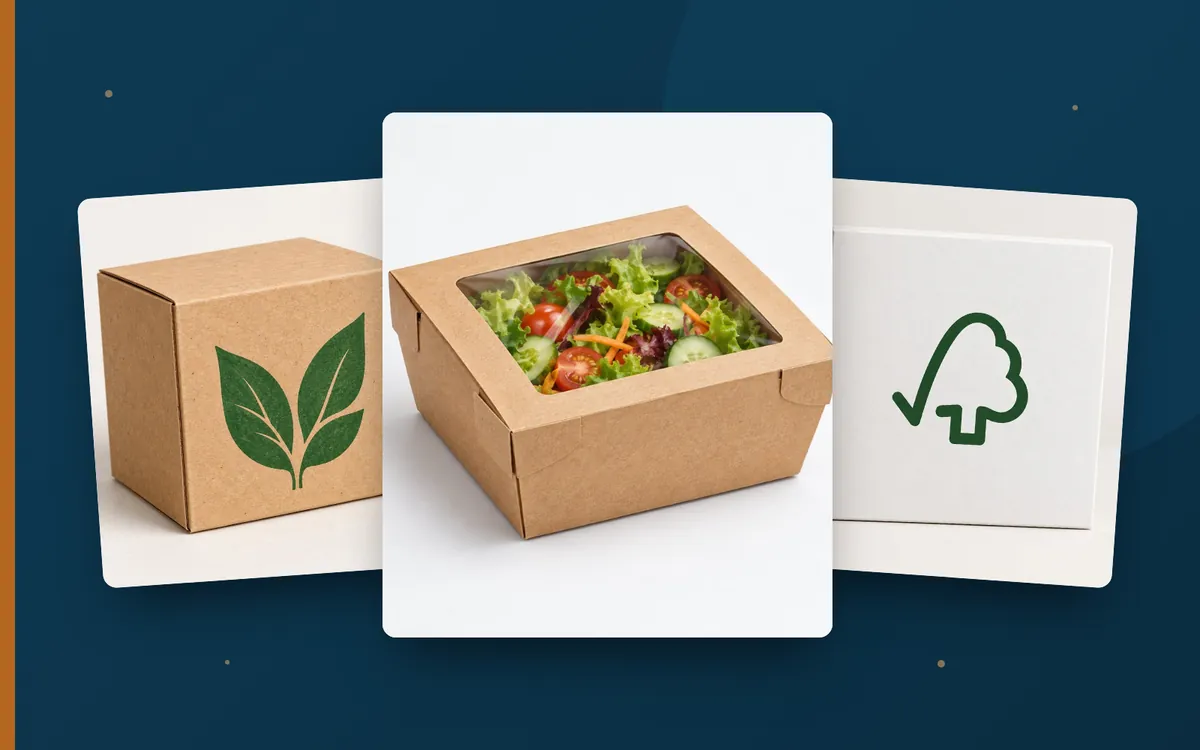
Sometimes the best solution is a middle way. A window in a folding carton shows the product and uses very little plastic. What matters is that the materials are easy to separate. That way consumers can dispose of both correctly.
Our conclusion
For products that do not need a tight barrier against moisture or oxygen, cardboard is the better choice in most cases. It is more sustainable, easier to print and popular with customers. If you need special barrier properties, an individual assessment is worthwhile.
Would you like to switch your packaging from plastic to cardboard? We use FSC®-certified raw materials and up to 100% recyclable materials and will be happy to advise you on the right solution. You will receive a binding quote within 24 hours.
Request a quote →