Razor-sharp text, rich colours, clean edges. Perfect print quality catches the eye immediately, and so does its absence. But how is it actually achieved? The answer: through many interlocking steps. They start long before the printing press. An overview of the most important factors.
1. Print data: the foundation
Even the best press cannot make up for poor data. For a perfect result, your files need:
- Sufficient resolution: images of at least 300 dpi at actual size. Images from the internet are usually too small.
- Bleed: 3 mm all round, so that no white edges appear after trimming.
- Safety margin: keep important text and logos away from trim and fold lines
- The right colour space: CMYK instead of RGB, with spot colours defined as HKS or Pantone
- Embedded fonts: ideally as a print-ready PDF/X
You will find all the details in our article Supplying print data correctly. We check your files free of charge before production.
2. The right material
Paper and board have a major influence on the printed image. On coated, smooth surfaces, colours look brilliant and details very sharp. Uncoated papers and kraft board absorb more ink. As a result, colours look more matt and natural. Whiteness, opacity and thickness also play a role. Our article GC1, GC2 or kraft board helps you choose.
3. The right printing process
Every process has its strengths. Offset printing offers the highest colour consistency for large runs. Digital printing is flexible for small quantities. Screen printing stands out with opaque colours, and UV printing with durability on many materials. Our article The most important printing processes at a glance shows which process suits your project.
4. Colour management and proofs
To make the printed colours look as planned, you need consistent colour management. We work to the ISO 12647 standard. It defines how colours are printed under defined conditions. A colour-accurate proof shows in advance what the result will look like. More in our article What role does colour accuracy play in printing?.
5. Precision on the press
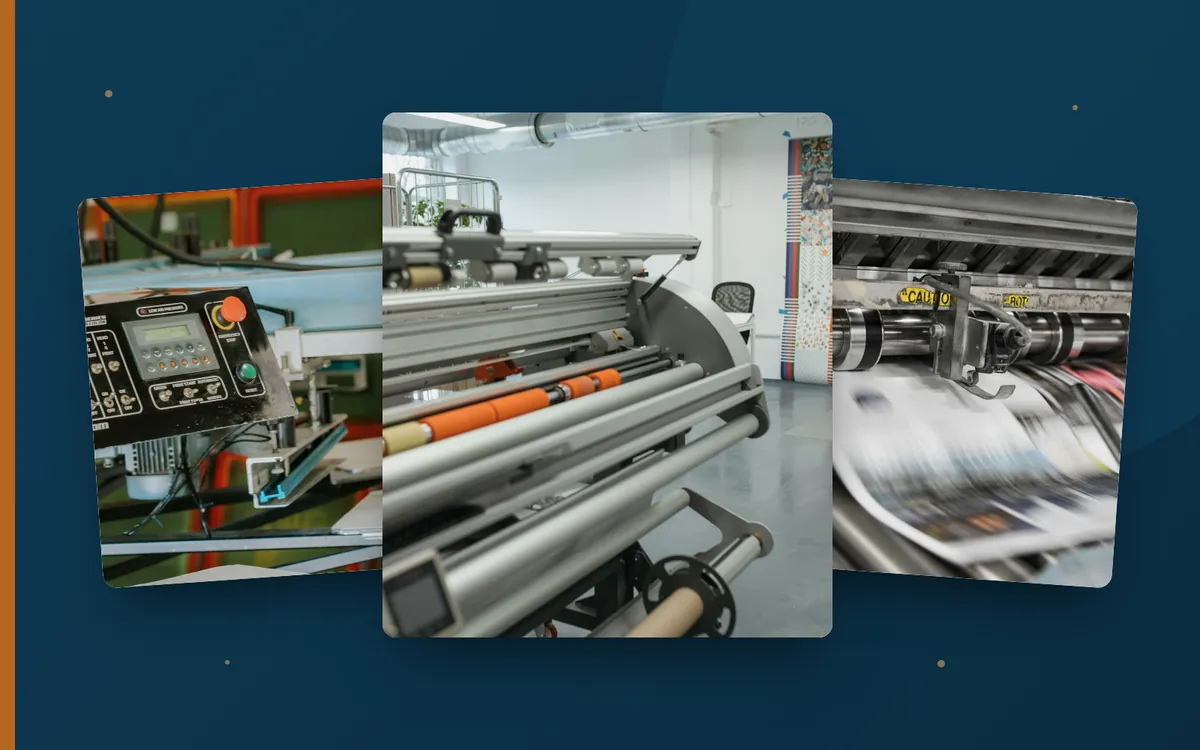
Many details matter during printing: exact registration of the individual colours, even inking across the whole sheet and stable conditions throughout the run. Regular measurements and checks ensure that the last sheet looks exactly like the first.
6. Clean finishing processes
Print quality does not end at the press. Precise cutting, die-cutting, creasing, folding and gluing decide whether packaging or a brochure looks premium in the end. When printing, die-cutting and gluing all happen in the same plant, every step fits seamlessly together.
7. Finishing as the crowning touch
Soft-touch, UV coating, hot foil or embossing take good printing to a new level. What matters is that the finish matches the printed image exactly. Finishing areas should therefore be set up as a separate layer in the print data. For inspiration, see our article Finishing that works.
8. Samples and quality control
For packaging, a sample before the series is well worth it. It lets you check shape, colours and finishing on the real object. Final checks ensure that the entire delivery meets your expectations. Read how this works in our article From sample to series.
Your path to perfect print quality
Perfect print quality is teamwork between you and your printer. You supply good data, and we take care of the rest: from the free print data check and colour management to ISO 12647 to finishing in our own plant. Feel free to order our free sample pack with material and print samples. You will receive a binding quote within 24 hours.
Request a quote →