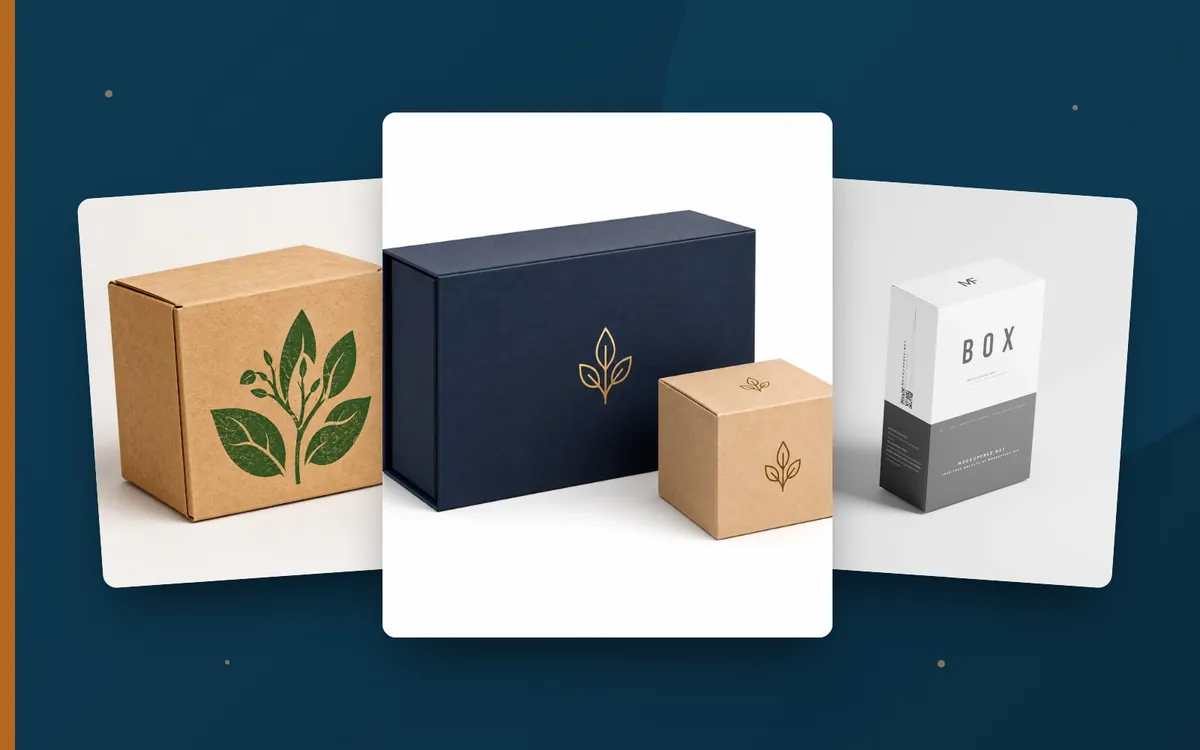
Packaging is often the first thing your customers see and touch of your product. It protects the contents, carries your brand and helps decide – on the shelf or at the front door – whether a product wins people over. At the same time, the choice is huge: folding carton or gift box, kraft board or corrugated board, offset or digital printing? The following steps will help you find, step by step, the packaging that suits your product, your target group and your budget.
1. Know your product inside out
The starting point is not the design but the contents. The more precisely you describe your product, the better the packaging will fit:
- Dimensions and weight: Measure the length, width and height of the product – for several variants, use the largest one. The weight determines how sturdy the material and construction need to be.
- Fragility: Glass, electronics or delicatessen need support inside, for example from an insert or a precisely fitting shape.
- Special requirements: Food, cosmetics and pharmaceutical products place their own demands on materials and printing inks. For food, make sure you choose suitable materials – read more in our article on food packaging.
2. Define the purpose and sales channel
Where and how will the packaging be used? The answer changes the requirements fundamentally:
- Retail shelf: First impressions count. The packaging has to stand out from competitors, communicate information clearly and stack well.
- E-commerce shipping: Stability and protection come first – along with the unboxing experience at the customer’s door.
- Gifts and presentation: Feel, finishing and a special opening experience matter more than the lowest unit price.
- Hospitality and to-go: Function, hygiene and quick handling in day-to-day business are decisive.
3. Choose the right type of packaging
The product and its purpose usually point to the basic format:
- Folding cartons: the cost-effective all-rounder for cosmetics, food, supplements or technology. Delivered flat, stored compactly and printable all over.
- Gift boxes and custom boxes: with lid, magnetic closure or as a slide box – for premium products, corporate gifts and special occasions.
- Shipping boxes and e-commerce boxes: made of corrugated board, robust in transit and printed inside and out on request.
- Paper carrier bags: the perfect addition for retail, events and personal hand-overs.
Not sure which format fits best? In our configurator you can compare different packaging types and options without obligation.
4. Select the right material
The material affects stability, print result, appearance and price alike:
- Virgin fibre board (e.g. GC1): a bright, smooth surface for brilliant colours – ideal for cosmetics and premium products.
- Recycled board (e.g. GC2): economical and easy to print, often the choice for larger runs.
- Kraft board: a natural look that underlines a sustainable brand image.
- Corrugated board: the first choice for shipping and heavy products.
You will find a detailed comparison in our article GC1, GC2 or kraft board.
5. Plan design, printing and finishing
Good packaging communicates in seconds what your product is and what your brand stands for. Focus on a few clear messages: logo, product name, key benefits and mandatory information. As a rule of thumb for the printing process: digital printing pays off for smaller runs and variants, offset printing for larger quantities with consistently high colour quality – find out more in Offset or digital printing.
Finishes such as hot foil, embossing, spot UV coating or soft-touch lamination make your packaging look and feel more premium. Use them selectively, for example on the logo – for maximum impact at manageable cost. For inspiration, see our article Finishing that works.
6. Consider sustainability and legal obligations
More and more customers pay attention to how environmentally friendly packaging is. We use FSC®-certified raw materials and up to 100% recyclable materials. A precisely fitting size also helps to save material and filling. Don’t forget your obligations as a company placing packaging on the market, such as registration in the German packaging register LUCID – details in our article on the Packaging Act.
7. Calculate budget and quantity realistically
The unit price usually falls as the run length rises, because set-up costs for printing and cutting dies are spread over more units. So think about how much you realistically need over the coming months – and how much storage space you have. Folding cartons delivered flat save a lot of space. We produce our packaging from 500 units, delivered free to your door.
8. Test with a sample
Before the series starts, a sample is well worth it. A blank (white) sample shows whether the shape and fit are right; a printed sample lets you experience colours and finishes. Test the sample in real use: Does the product fit securely? Is the packaging easy to fill and close? How does it look on the shelf or when unboxed? How a project runs from sample to delivery is explained in our article From sample to series.
Common mistakes – and how to avoid them
- Packaging that is too large: Lots of empty space looks cheap, needs filling material and increases shipping costs.
- Overloaded design: Too many messages weaken the impact. Less is usually more.
- Choosing material by price instead of purpose: Board that is too thin can give way under heavy products – and ends up costing more.
- Planning too late: Starting in good time leaves room for samples, approvals and finishing.
- Unchecked print data: Missing bleed or wrong colour profiles delay production. Our article on print data can help.
Checklist for your enquiry
- Product: dimensions (L × W × H), weight and special features
- Purpose: retail shelf, shipping, gift or hospitality
- Preferred packaging type and material
- Printing: artwork, colours and desired finishing
- Quantity and preferred delivery date
- Logo or print data (print-ready as PDF/X)
The right packaging comes from the interplay of product, purpose, material and design. You don’t have to go it alone: send us your enquiry or put together your packaging directly in the configurator – we will be happy to advise you and send you a binding quote within 24 hours.
Request a quote →