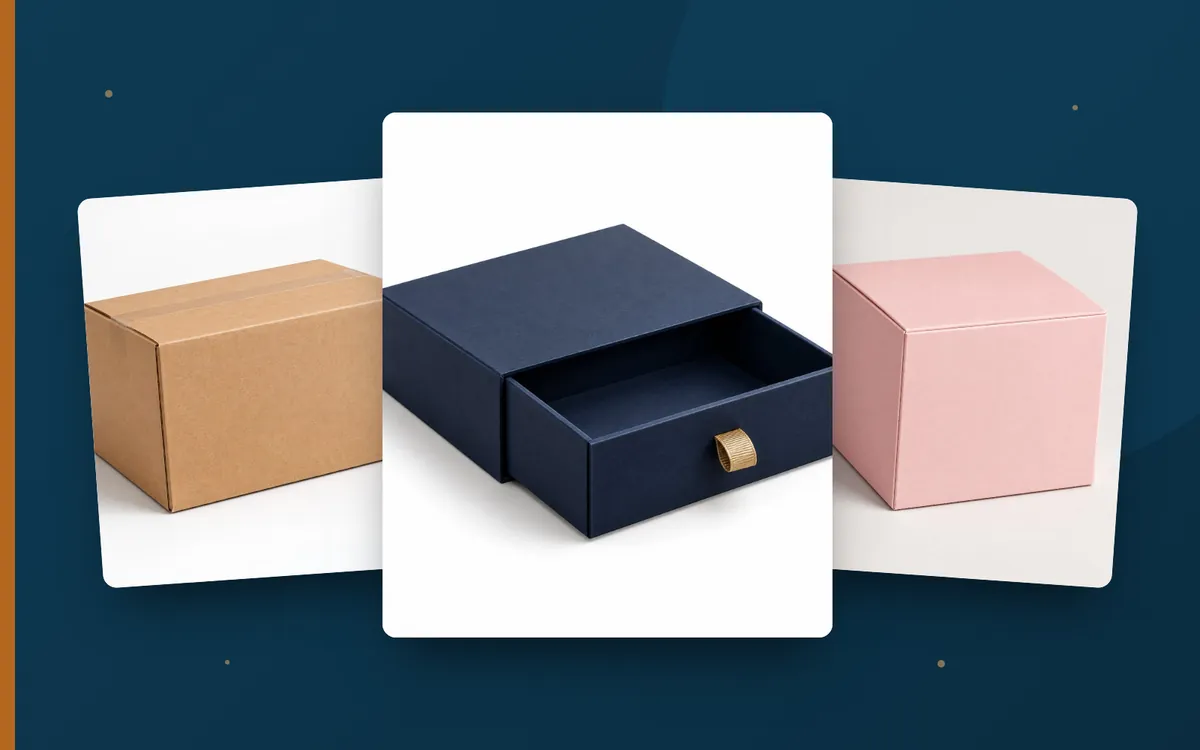
Not all packaging is the same. The term covers very different constructions. They differ in stability, appearance, storage and price. Knowing the main types of packaging makes it much easier to choose the right one for your product. Here is an overview.
First things first: primary, secondary and transport packaging
Packaging experts first distinguish packaging by its job:
- Primary packaging: encloses the product directly, for example the tube, jar or pouch.
- Secondary packaging: holds the product for sale, for example the printed folding carton around the tube. It carries the brand, information and mandatory details.
- Transport and shipping packaging: protects the goods on their way to the retailer or end customer. This is usually a corrugated box.
Many of the packaging types below can take on several of these roles at once.
Folding cartons
Folding cartons are die-cut and glued from a single board blank. They arrive flat and are only erected when filled.
- Strengths: cost-effective even in large runs, compact to store, printable and finishable all over.
- Typical for: cosmetics, food, supplements, pharmaceuticals and small electronics.
- Limits: only partly suitable for very heavy products or for shipping without an outer box.
Gift boxes and rigid boxes
Gift boxes are usually made of sturdy greyboard laminated with printed paper. They come as lid-and-base boxes, hinged boxes with a magnetic closure or slide boxes.
- Strengths: premium feel, high stability and a special unboxing experience. Many customers reuse the box afterwards.
- Typical for: premium products, jewellery, spirits, corporate gifts and sets.
- Limits: higher unit price, and they are usually delivered ready-assembled. That means they need more storage space.
Shipping boxes and mailer boxes
Shipping boxes and e-commerce boxes are made of corrugated board. The fluting between the paper layers absorbs impacts and makes the box stackable.
- Regular slotted carton: the classic shipping box with flaps at the top and bottom. Robust, inexpensive and available in many sizes.
- Mailer box: a box with a hinged lid that opens like a gift. It can be printed inside and out and is ideal for online shops that care about their brand.
Cardboard boxes and kraft boxes
For many products, a sturdy cardboard box with a telescopic lid or tuck-in base is all you need. Kraft boxes use the natural brown look. They suit brands that want to make sustainability visible.
Food and take-away packaging
Food packaging must also be suitable for contact with food. Burger boxes, salad bowls, snack trays and take-away boxes are designed for quick handling and resistance to grease or moisture. Read more about the requirements in our article on food packaging.
Bags and add-ons
Printed paper carrier bags accompany the product out of the shop. Labels and stickers and printed adhesive tape are an affordable way to personalise neutral packaging. They can also mark variants or promotions.
The differences at a glance
- Most economical: folding cartons and slotted cartons, especially in larger runs.
- Most premium: gift boxes made of laminated greyboard.
- Most stable in shipping: corrugated board of the right grade.
- Most space-saving: all constructions delivered flat.
- Most natural look: kraft board.
Which type of packaging suits you?
The decision depends on the product, its purpose and your budget. You will find a step-by-step guide in our article How to find the right packaging for your product. Or simply ask us: we will recommend the right construction and send you a binding quote within 24 hours.
Request a quote →