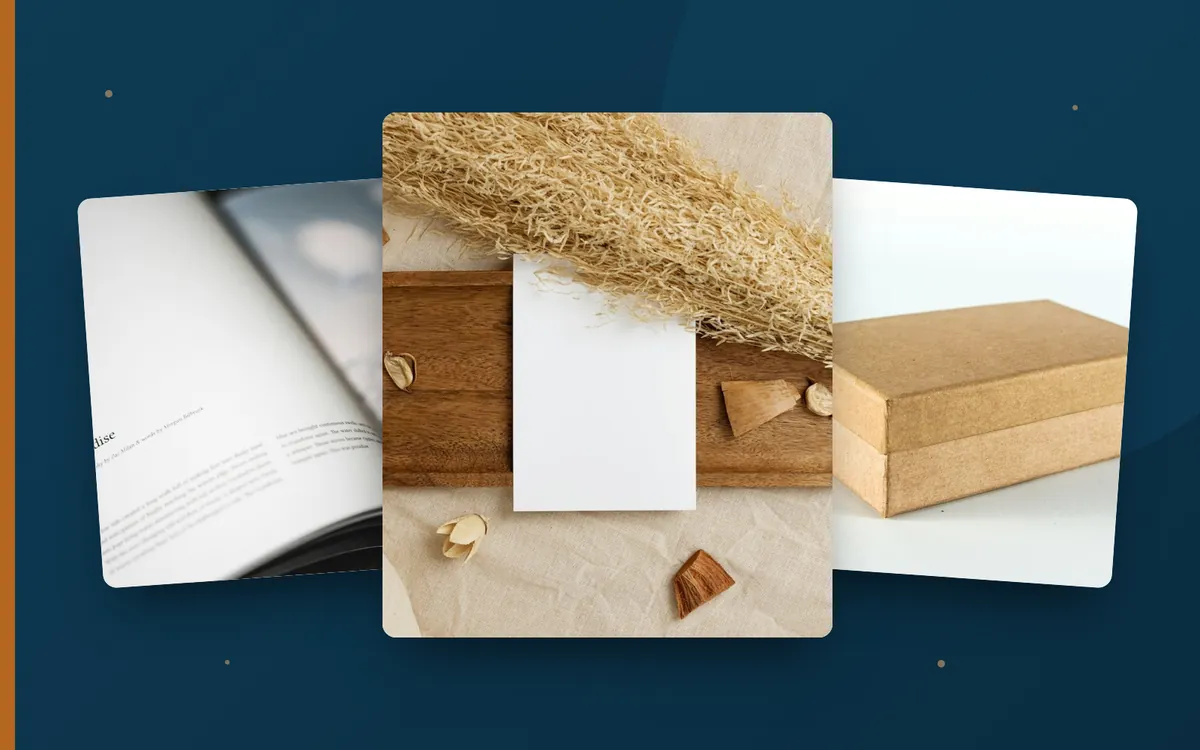
Not all paper is the same. Whether brochure, business card, folding carton or shipping box: the choice of paper determines how a printed product looks, how it feels and how sturdy it is. Here are the main types of paper and their typical uses.
Paper, board or cardboard?
The distinction is made mainly by grammage, given in grams per square metre (g/m²). As a rough guide:
- Paper: up to about 150 g/m², for example for flyers, letterheads, brochures and catalogues
- Board: about 150 to 600 g/m², for example for folding cartons, covers and business cards
- Heavy board: above that, for example for rigid boxes and gift boxes
The boundaries are fluid. What matters more than the label is that thickness and stiffness suit the product.
Coated papers (art paper)
Coated papers have a fine surface layer. The ink stays on the surface, so images look brilliant and sharp. They come in gloss, silk and matt.
- Gloss: vibrant colours, ideal for photos, leaflets and promotional material
- Matt or silk: elegant, glare-free and easy to read, popular for catalogues, annual reports and brochures
Uncoated papers
Uncoated papers have no coating and an open, slightly rough surface. They absorb more ink, which makes colours look somewhat more muted. In return, they are excellent to write on. They are the first choice for letterheads, notepads, forms and text-heavy books.
Recycled paper
Recycled paper is made entirely or mainly from waste paper. Modern grades are bright, easy to print and hardly distinguishable from virgin fibre paper. It is suitable for almost all print products with a sustainable focus.
Kraft paper
Kraft paper consists of long, unbleached fibres and is particularly tear-resistant. Its typical brown colour looks natural and honest. Kraft paper is used for paper carrier bags, wrapping paper, labels and food packaging.
Fine and textured papers
Papers with a linen, felt or laid texture, through-dyed papers or pearlescent papers give invitations, business cards, folders and premium packaging a special feel. They are also often used to wrap gift boxes.
Board grades for packaging
- Virgin fibre board (e.g. GC1): bright and smooth, ideal for cosmetics, pharmaceuticals and premium products
- Recycled board (e.g. GC2 or GD2): economical and easy to print for many folding cartons
- Kraft board: a natural look for sustainable brands
- Greyboard: stable and rigid, the basis for wrapped gift boxes
- Corrugated board: for shipping boxes and heavy products
Read more in our article GC1, GC2 or kraft board.
Which paper for which purpose?
- Flyers and leaflets: coated gloss or matt
- Brochures and catalogues: coated matt or silk, with a heavier cover
- Letterheads and forms: uncoated paper
- Business cards: board, ideally with texture or finishing
- Packaging: board, kraft board or corrugated board, depending on the product
Not sure which paper suits your project? Order our free sample pack with material and print samples. We will be happy to advise you personally and send you a binding quote within 24 hours.
Request a quote →